
Downtown Los Angeles can mean Union Station, a convention-center hotel, a business meeting in the Financial District or an Arts District rental. That matters because an airport option that is simple for one address can add another transfer for another. The useful question is not only “What is cheapest?” It is “What gets this particular group, with these bags, to the right downtown door without turning arrival day into a logistics project?”
Start with a realistic arrival window. Landing time is not curbside time. Deplaning, baggage claim, an international arrival, a stroller, a lost bag or a delayed companion can all move the plan. Once everyone and every bag are together, pick the option that fits the destination and the group, then check the current airport directions before you leave the terminal.
Choose the option that matches the last mile
For a solo traveler headed near Union Station with a manageable suitcase, the FlyAway is often the cleanest public-transit answer. For someone continuing by Amtrak, Metrolink or Metro, Union Station can be the destination as well as the transfer point. LAX lists FlyAway service between every terminal and Union Station, with boarding on the Lower/Arrivals Level at the blue FlyAway columns.
For a traveler whose destination is closer to 7th Street, the Convention Center, a hotel in South Park or a specific office, a door-to-door option can save a second transfer. That is particularly true late at night, after an international flight, when several people are sharing bags or when a child seat and a larger vehicle are part of the plan.
- FlyAway to Union Station: Best when Union Station is your destination or your next connection is there.
- Metro: Best for budget-conscious travelers who are comfortable making a transfer and handling luggage.
- Taxi or rideshare: Best when you want a direct address but do not mind the LAX-it process or variable pricing.
- Reserved private transfer: Best when the group, bags, timing or destination calls for a vehicle and handoff arranged before travel day.
None of these choices can promise a fixed freeway time. The LAX FlyAway FAQ gives a 30 to 60 minute estimate for Union Station and explicitly notes that traffic changes from day to day. Treat a timetable as a planning tool, not a guarantee, especially when a dinner reservation, conference check-in or train connection is involved.
FlyAway is the simple public route to Union Station
FlyAway is a good fit when the airport-to-Union Station connection genuinely solves the trip. You board at the terminal, keep the luggage with you and arrive at the city’s major rail hub without navigating LAX-it or a rail transfer first. It is also a practical starting point for travelers connecting onward out of Los Angeles.
There is one important limitation: Union Station is not every downtown address. Before choosing it, pull up the final hotel, apartment or meeting location and ask whether a walk, Metro connection or another ride will still be needed. A one-seat airport ride can become less convenient if the actual destination is several neighborhoods away with luggage in tow.
Check the official LAX ground transportation page on travel day for the current fare, boarding information and service changes. That small check matters more than relying on an old travel forum post or a screenshot saved before a schedule update.
Metro costs less, but plan for the airport shuttle and transfers
Metro can be the lowest-cost route, especially for a traveler with a light bag and a flexible schedule. From the terminal, LAX directs passengers toward the free Metro Connector shuttle, which runs from the Lower/Arrivals Level to the LAX/Metro Transit Center. From there, the rail journey to downtown requires choosing the right line and transfer for the final address.
The route is not difficult when you are prepared, but it is not a one-seat airport-to-hotel ride. Metro’s own guide explains that travelers from 7th Street/Metro Center use the E Line toward Expo/Crenshaw, transfer to the K Line and continue to the LAX/Metro Transit Center in the airport-bound direction. Reverse planning after an arrival means the same transfer logic in the other direction, plus the terminal shuttle at the end. Use Metro’s current LAX/Metro Transit Center guidance and a live trip planner instead of memorizing a route.

Metro is most comfortable when one person can manage the navigation while everyone else handles a bag. It becomes less appealing when the party has several checked suitcases, young children, a tired older traveler or a fixed appointment downtown. Those are not reasons to avoid public transit, just reasons to decide honestly before you are standing outside a terminal.
Rideshare and taxis are direct, but use the right pickup plan
Standard Uber, Lyft and taxi pickups do not work like a private family pickup at the arrivals curb. LAX directs these trips to LAX-it near Terminal 1. Depending on the terminal, that can mean walking or taking the LAX-it shuttle, then joining the correct queue or meeting the driver in the designated area. The site’s LAX-it guide explains how that process works before you request a ride.
Do not order the vehicle when the plane touches down. First collect bags, make sure the entire party is present and confirm the exact pickup point. The same principle applies to a hotel arrival: the driver needs the actual downtown address, not simply “Downtown LA.” That avoids the common situation where one traveler is ready while another is still at baggage claim and a ride clock is already running.
Travelers leaning toward a ride app can also compare the airport process in the LAX Uber pickup guide and the LAX Lyft pickup guide. If a friend is collecting you instead, use the passenger pickup guide, not the rideshare instructions.
When a reserved car is worth arranging ahead
A prearranged car is less about making an airport arrival feel elaborate and more about reducing the number of decisions left for the curb. The flight, passenger count, luggage, child-seat needs and final address are handled before travel day. When the party is ready, everyone follows one clear pickup plan instead of comparing app prices, finding a shuttle stop or splitting into multiple vehicles.
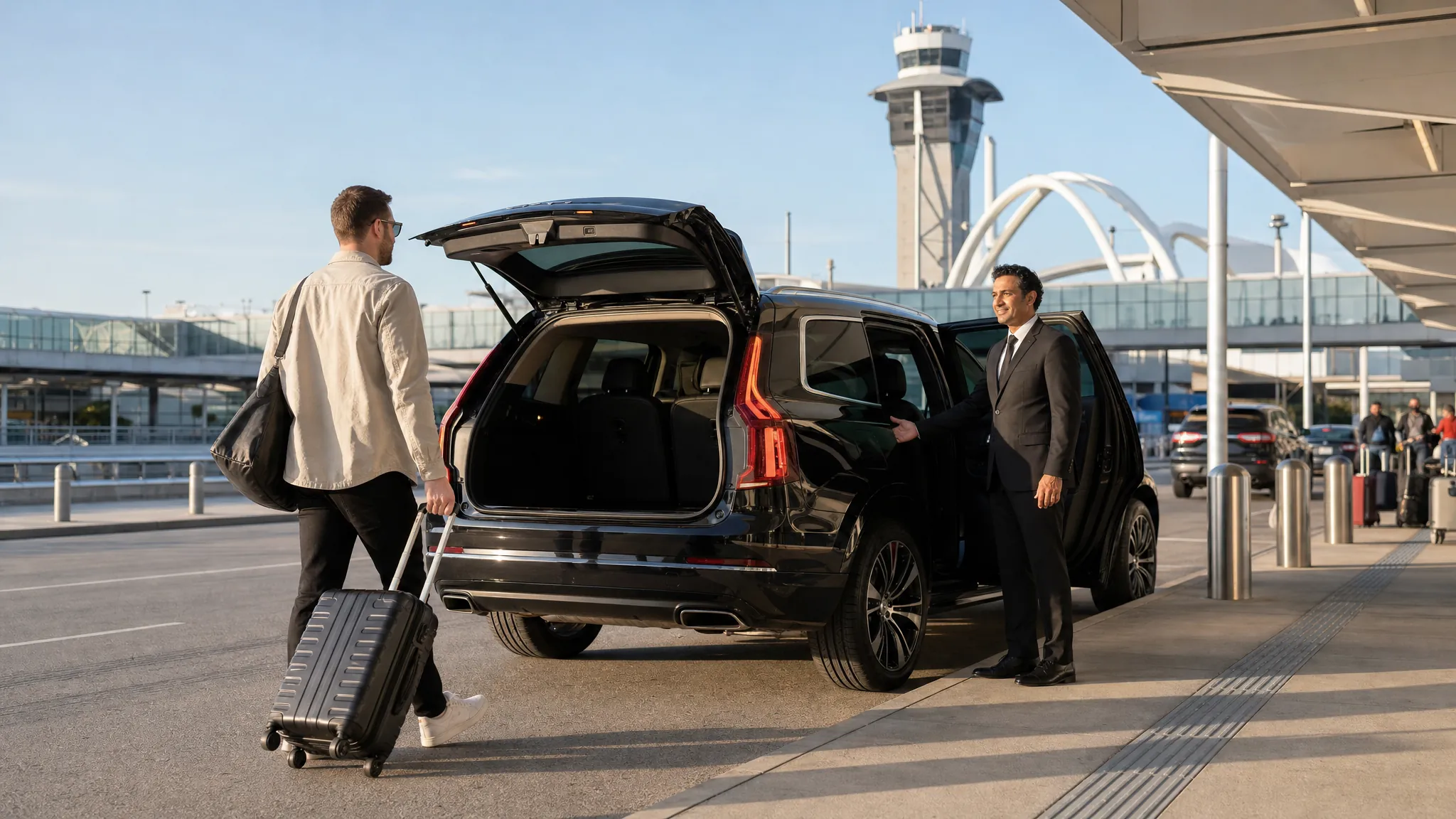
LAX Black Car Services can arrange an airport transfer for a downtown hotel, office, residence or event. The fleet options make it easier to choose based on bags as well as passenger count, from a sedan for a lighter trip to an SUV, van or Sprinter-style option for a group. For travelers who need help bridging the terminal-to-vehicle handoff, the LAX meet-and-greet guide explains what to confirm before booking.

This approach is especially useful for conference groups, families, executives, cruise travelers continuing into the city and guests arriving late. It is also a sensible choice when the cost of a missed meeting, an overstuffed rideshare or an extra transfer outweighs the savings of the cheapest route.
Build the plan around the arrival, not the ideal schedule
The airport portion of the day often looks simple on a map and complicated in real life. A traveler may land on time but wait for a checked bag. A family may need a restroom stop before moving through the terminal. An international arrival can add time before the group is even ready to think about a vehicle. Give the plan permission to absorb those ordinary delays instead of booking a connection that only works if every step goes perfectly.
This is especially important when Downtown is only the first stop. Travelers continuing to a cruise terminal, a wedding, a sports event, a convention appointment or a long-distance train should calculate from the actual destination door, not from the LAX exit sign. Include the handoff from the terminal, the ride itself, parking or drop-off details, and the walk from the curb to the lobby or venue entrance. A modest buffer is usually cheaper and calmer than trying to recover from a missed fixed-time plan.
For a flexible solo trip, the extra uncertainty may be an easy trade for lower-cost public transportation. For a party that has paid for tickets, a hotel night, a meeting room or a timed reservation, the decision changes. The more expensive part of the day is sometimes not the ride. It is the consequence of arriving late, splitting a group up or showing up with bags and no clear next step.
Make the last mile part of the comparison
Union Station, 7th Street, LA Live, the Convention Center and the Arts District are all commonly called Downtown Los Angeles, but they are not interchangeable destinations. Before choosing an airport option, open the exact hotel, office, apartment or venue on a map and look at the final blocks. A route that ends near the right door can be efficient. A route that ends several blocks away can mean another rideshare, a long walk with luggage or a transfer that is less appealing after dark.
Using a rideshare or taxi for that last stretch can work well when one person has a light bag and the transfer is short. It adds a second pickup, another wait and another point where pricing or traffic can change. A group that expects to take FlyAway and then order a larger car should compare that complete cost and effort with a direct transfer before deciding. The better value is not always the first number shown in an app. It is the choice that gets everyone and everything to the final address with the fewest surprises.
If the trip does include a public option followed by a second ride, keep phones charged, save the final address in advance and agree on the pickup plan before leaving the first vehicle. Those small preparations stop the group from making the most important choice of the trip while standing at a busy station with luggage.
A quick arrival checklist for Downtown LA
- Confirm the exact final address. “Downtown” covers a lot of ground, and it changes which option is most convenient.
- Count the people and bags together. A vehicle that seats the group may not have useful cargo room for the group.
- Wait until the group is actually ready. Bags, restroom stops and messages come before requesting an on-demand ride.
- Check live airport instructions. Use the official airport or transit source for current boarding and shuttle details.
- Build a timing buffer. Traffic around LAX and downtown is variable, so avoid stacking a fixed commitment immediately after arrival.
Travelers comparing a different part of Los Angeles can use the LAX-to-hotel transportation guide, while beach-bound visitors can compare LAX-to-Santa Monica transportation. The right airport plan should fit the actual destination, not force every traveler into the same route.
A few minutes of planning before departure makes the first hour in Los Angeles calmer. Choose the route that matches the day you actually have, then let the airport arrival be an arrival, not another trip to manage.