Picking someone up at LAX is simple in principle: your passenger lands, collects their bags, walks outside and gets into the car. The part that makes it stressful is the timing. A driver who heads into the terminal area too early may need to keep circling. A traveler who heads outside before their ride is close can end up waiting at a busy curb with luggage. A few clear steps keep both sides of the pickup moving.
This guide is for a family member, friend or colleague coming in a personal vehicle. It explains where that pickup happens, what to coordinate before the flight lands and when a pre-arranged car service makes more sense than asking someone to navigate the airport roadway on your behalf.
Start with the right pickup route
LAX separates pickup options by the type of ride. The airport's official LAX-it guidance says private vehicles can still collect arriving passengers directly from the terminal, at the outer curb on the lower arrivals level outside baggage claim. That is different from LAX-it, which is used for taxis and many ride-app pickups.
In practical terms, the arriving passenger should not follow the green LAX-it signs when a family member is coming in a personal car. They should collect bags, confirm the terminal and head toward the lower arrivals level only when the driver is ready to approach. The driver should use the passenger's terminal, not a vague message such as "I am outside," to find the right part of the airport roadway.
If the passenger booked a private transfer instead of a family ride, the basic curbside area may be similar, but the handoff is planned differently. The site's LAX airport pickup guide explains how a scheduled chauffeur, a rideshare and a personal pickup use different arrival plans.
Before the flight lands, agree on one simple plan
The best pickup message is agreed on before the plane arrives. Make sure the passenger has the driver's number, the driver has the flight number and both people know which terminal to expect. Flights can arrive late, gate changes happen and baggage can take longer than expected. A plan that only works when everything lands exactly on time is not much of a plan.
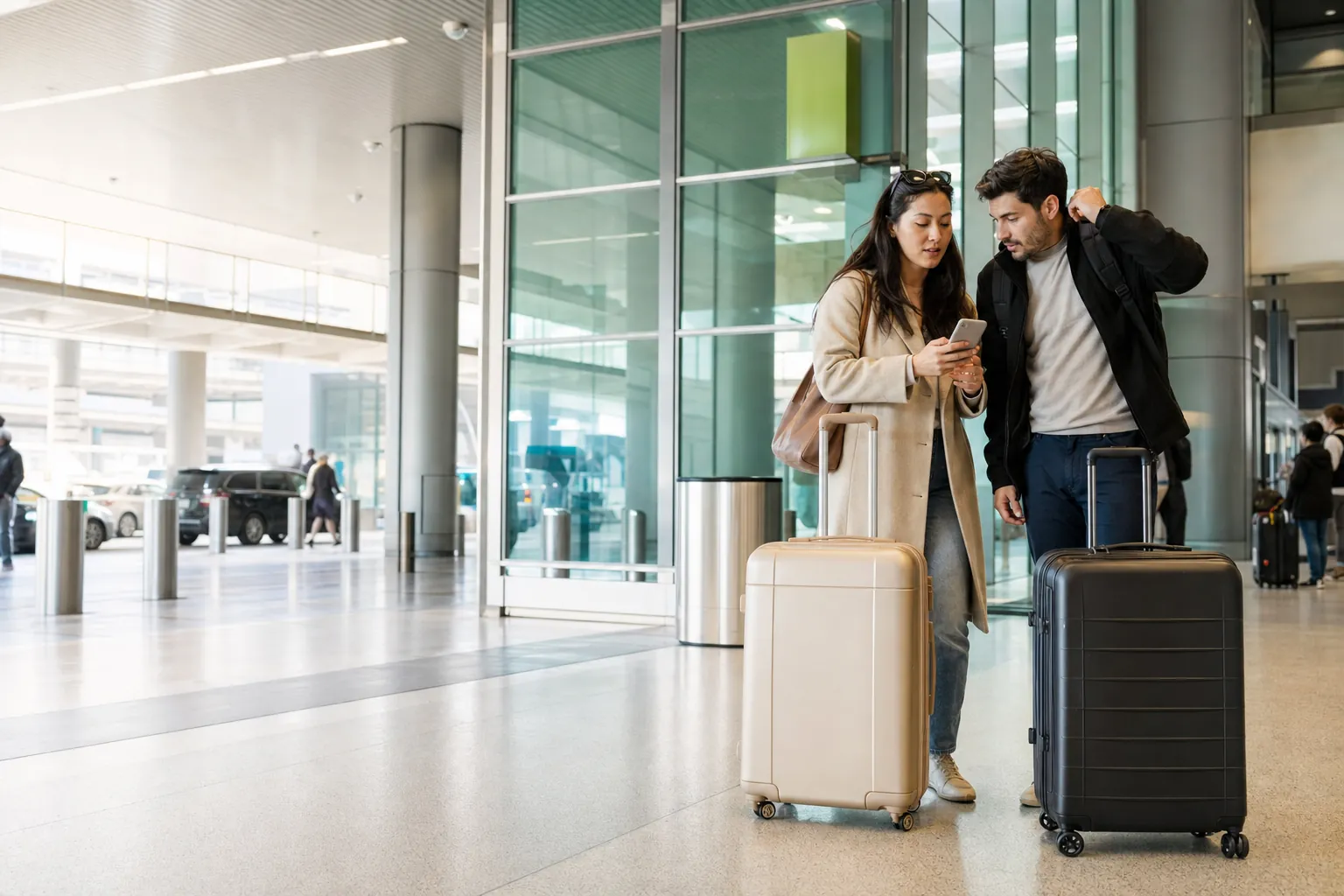
Choose one point of contact when several people are traveling. That person can share updates with the driver while the rest of the group stays together. This matters for families, older travelers and visitors who may be juggling bags, phones, children or an unfamiliar airport. It also prevents three passengers from sending three different curb locations.
Before travel day, share anything that changes how the pickup needs to work: a stroller, several large suitcases, a wheelchair, a child car seat or a group that cannot fit comfortably in one vehicle. A quick look at the available vehicle options can help when a personal car is likely to be too small for people and bags together.

Wait for the "bags in hand" text, not the landing alert
A flight landing is not the same as a passenger being ready at the curb. The aircraft may still taxi, the traveler may need to walk a long concourse, checked bags may take time and the group may not be together yet. Sending a driver toward the terminal as soon as the flight lands usually creates more circling, not a faster pickup.
A better trigger is a short message after baggage claim: "All bags collected, Terminal 5, heading to the lower arrivals level." That gives the driver a useful destination and tells them the traveler can board soon. If the group is still waiting for one suitcase, needs a restroom break or is meeting another passenger, say that clearly rather than guessing at a curbside time.
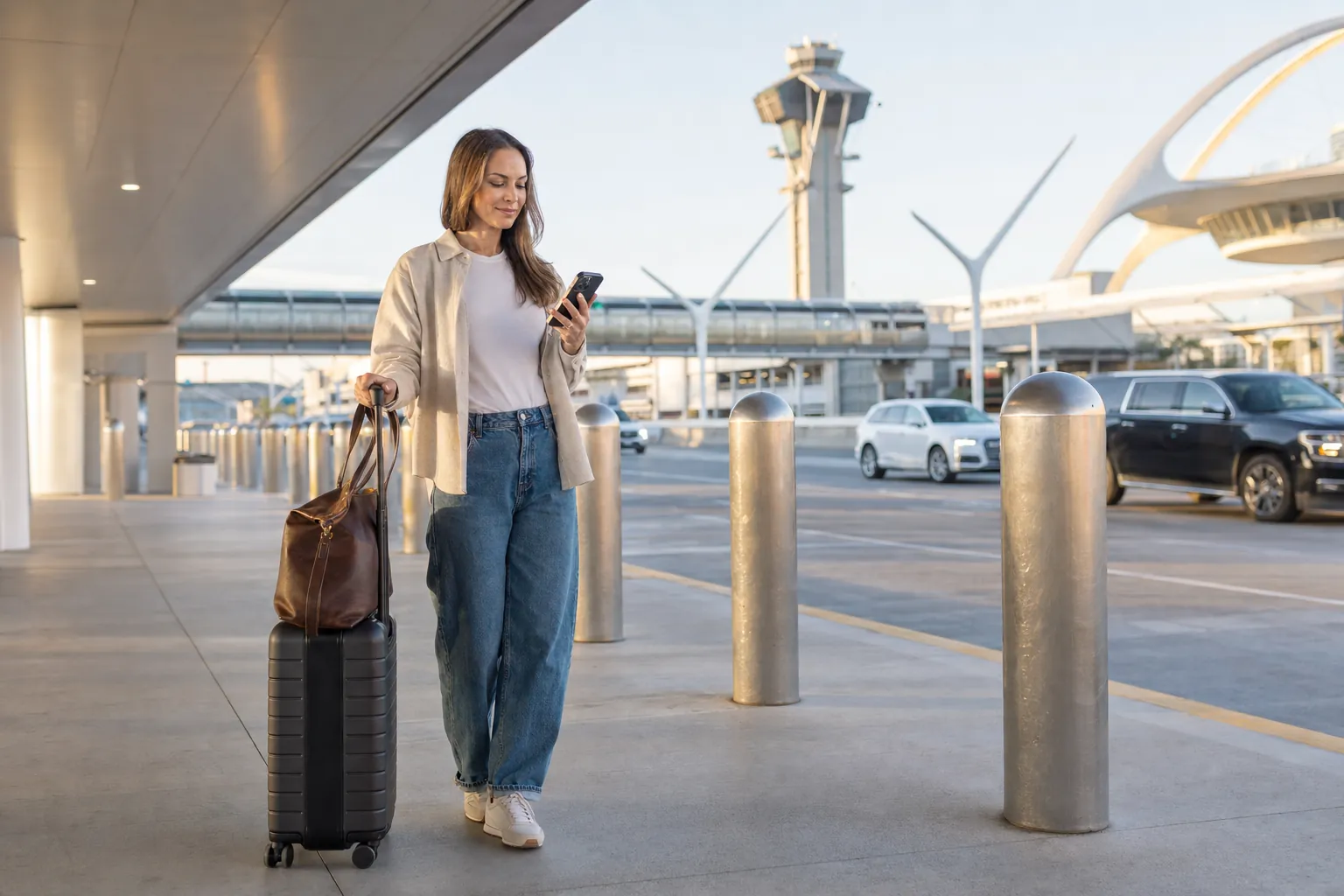
Passengers should keep the phone charged and easy to reach after landing. One person can manage the messages while everyone else stays with the luggage. For an international arrival, allow even more flexibility because the time between landing and the terminal curb can vary. The goal is not to predict the exact minute. It is to make the final handoff calm and specific.
Meet at the lower arrivals level outer curb
When the passenger is ready, they should follow signs toward baggage claim exits and the lower arrivals level, then use the outer curb for a personal-vehicle pickup. The airport notes that private vehicles can pick up directly from the terminal in that location. The exact place can still depend on the terminal and current roadway conditions, so the driver's and passenger's messages should stay specific.
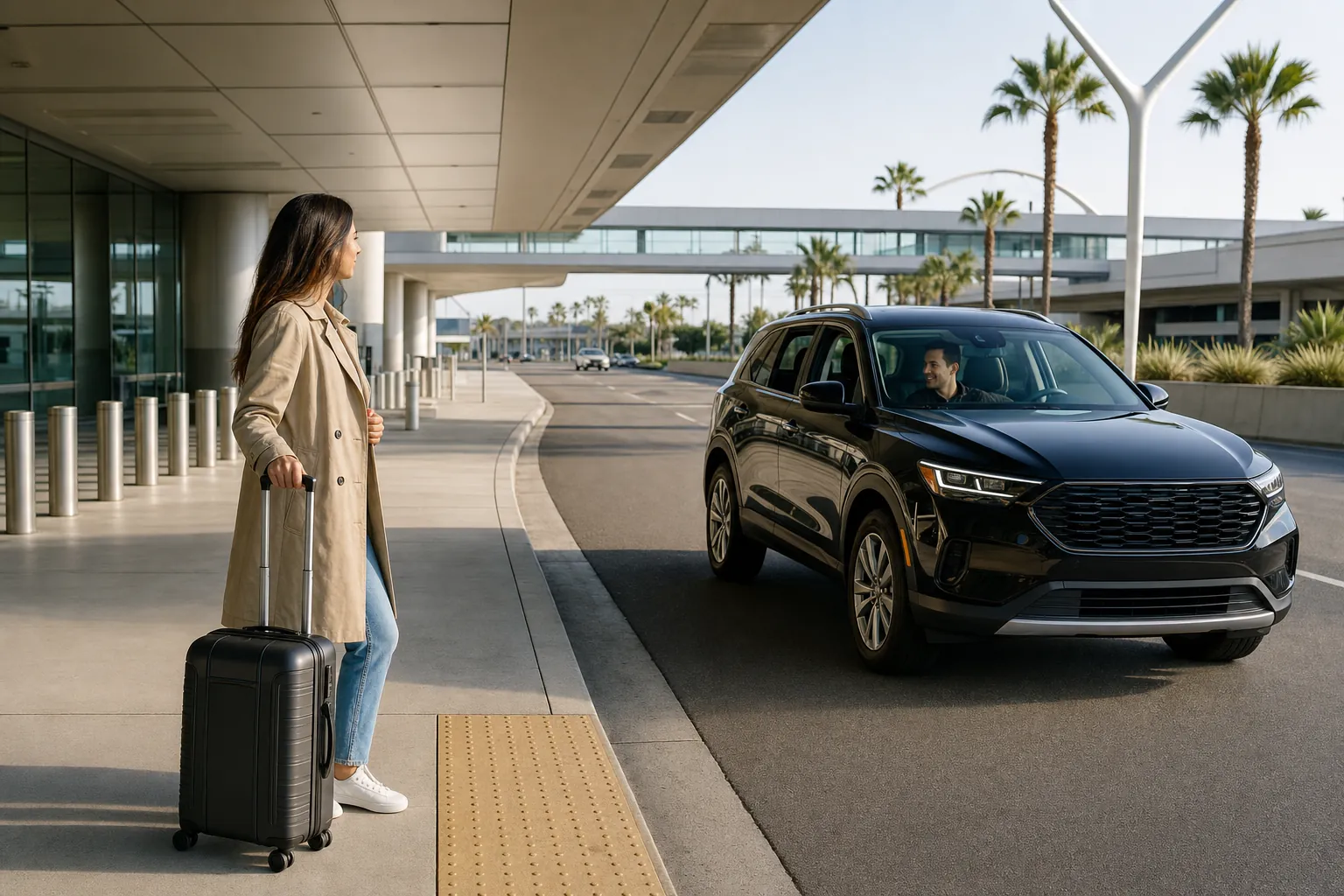
Once outside, the passenger should look for the agreed vehicle and confirm it before stepping toward the roadway. The driver should approach only when the group is ready to load. Airport curbs are active loading areas, so this is the moment to keep the interaction short and organized: identify the vehicle, open the trunk, load bags, make sure everyone is inside and leave the curb.
If the passenger is unsure where to go, it is better to stay inside or at a clear safe point while checking the terminal and messages than to walk along the curb searching for a car. The airport's current ground transportation guidance is useful close to travel time, especially during construction or a busy travel period.
If the pickup plan changes after landing
Airport pickup plans change all the time. A checked bag may be delayed, one traveler may arrive at a different terminal, a child may need a break or the driver may be caught behind an airport traffic backup. Those changes are easier to handle when nobody treats the original plan as a rigid promise. The passenger should send one short update with the new situation and wait for a clear reply before walking to a different curb.
When the driver is delayed, the passenger does not need to stand at the edge of the roadway with every bag. Find a safe place near the terminal exit, keep the group together and wait until the driver confirms the approach. When the passenger is delayed, the driver should stay out of the terminal curb area until the passenger is genuinely ready. Repeated loops through airport traffic rarely help either person.
For travelers who need extra time or clearer support, build that into the plan before the trip. An older family member, a first-time visitor, someone recovering from a long flight or a passenger traveling with young children may be better served by a planned handoff rather than a hurried text exchange. The goal is not to make a simple pickup complicated. It is to make sure the last few minutes fit the person being collected.
When the pickup is being arranged for a guest rather than a family member, make sure the guest receives the same information as the driver. They need the contact number, terminal plan and vehicle description, not just a message that someone is "on the way." That small amount of detail removes the awkwardness of a visitor trying to decide whether to wait, walk or accept help from an unrelated driver.

Plan for luggage before the car reaches the curb
Many pickups go wrong because the vehicle was chosen by passenger count alone. Two adults with carry-ons may fit comfortably in a sedan. Add two large suitcases, a stroller, a car seat or sports equipment and the same trip can become an awkward curbside puzzle. Think about what has to fit after the passenger gets in, not only how many seats the vehicle has.
Have the passenger tell the driver how many large and small bags they have before the driver approaches. If the trunk will be tight, loading takes longer and the group may need to rethink the ride before everyone is already standing at the curb. For a larger party, a planned group transportation option can keep the group together instead of splitting people and bags between cars.
Families should also decide who is responsible for each child, bag and stroller before opening the vehicle doors. That sounds obvious, but it is useful after a long flight when several adults are trying to move at once. A simple sequence works: bags first, children with an adult, then everyone settles in before the driver pulls away.

Give visitors a more useful pickup message
Someone who knows LAX may understand a short text such as "lower level, outer curb." A first-time visitor probably needs more context. Before the flight, tell them to collect their bags, turn their phone on, wait for the driver to say they are approaching and then follow signs to the lower arrivals level. Keep the message focused on the next action rather than trying to explain the entire airport in one note.
It also helps to set expectations around waiting. No one should feel rushed to leave baggage claim before their luggage is ready, and the driver should not have to guess whether a passenger has made it outside. Clear updates protect both sides from the common airport mistake of being only a few hundred feet apart but looking in completely different places.
If the visitor's plans include a hotel, a meeting, a cruise terminal or a longer trip through Southern California, confirm the final address before loading the car. That gives the driver a chance to check the route while the passenger settles in. For a more involved itinerary, the Southern California airport transfer service page explains the types of airport-to-destination rides that can be arranged in advance.
When a private car service is the easier choice
A family pickup is a good fit for a straightforward arrival: one or two travelers, a vehicle with enough room and someone who is comfortable driving to the airport at the right time. A pre-arranged private car can be a better fit when the pickup needs more coordination than that.
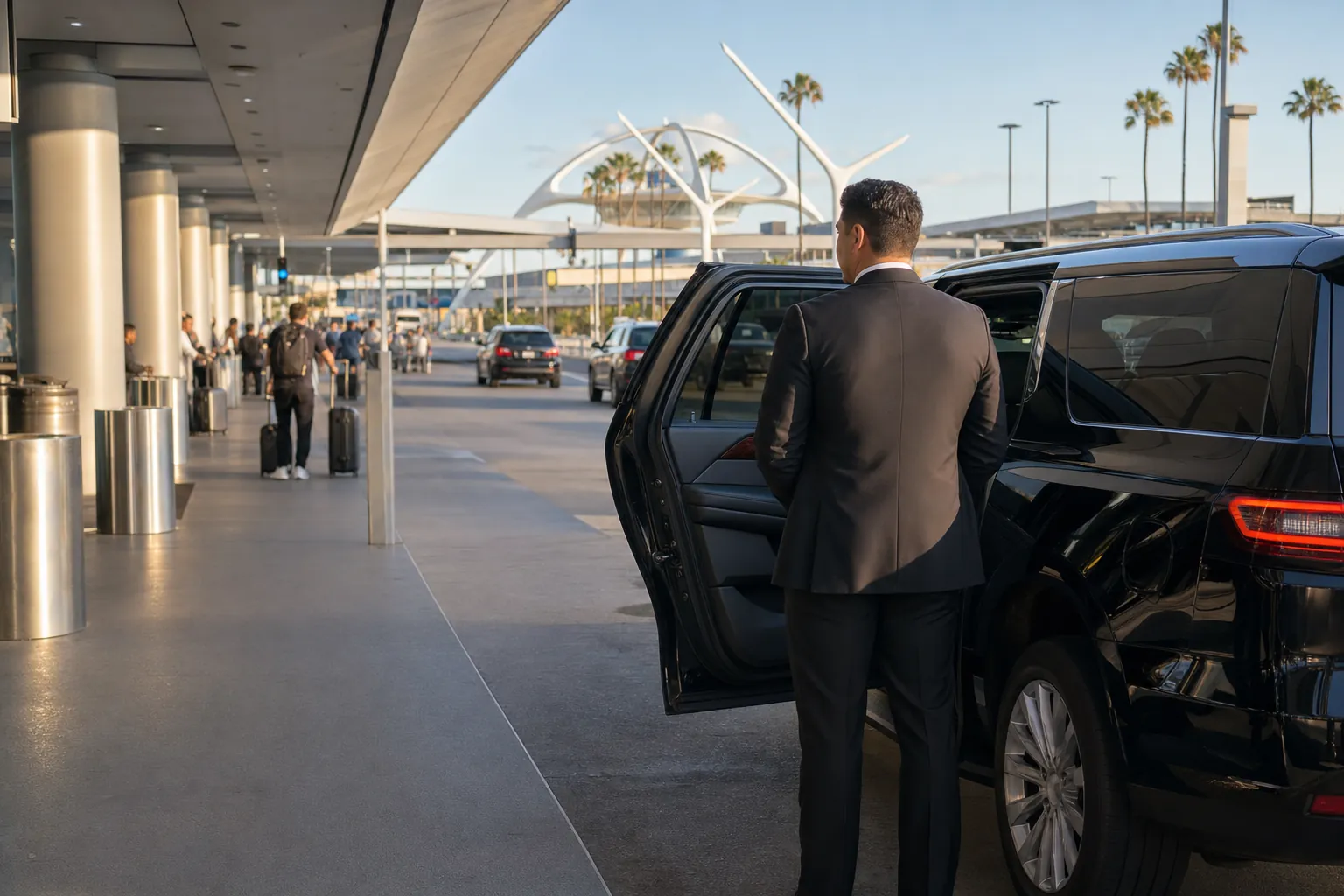
That might mean an executive guest, a family that needs child seats, a group with extra luggage, a late arrival, a longer ride after the airport or a traveler who does not know LAX well. With a planned transfer, the flight details, passenger count, luggage and contact plan are shared ahead of time. The driver, vehicle and airport handoff can then be arranged around the actual trip.
For someone who wants a more guided arrival, the LAX meet and greet service can reduce the amount of terminal-to-curb navigation a traveler needs to manage. For a ride that is ready to arrange, use the online booking page. For groups, special requests or a detailed itinerary, the trip planning form is the better place to start.
A quick LAX passenger pickup checklist
- Confirm the flight number, expected terminal and the driver's mobile number before the flight lands.
- Use one person as the group contact when more than one passenger is traveling.
- Wait until every checked bag is collected before telling the driver to approach.
- Send the terminal, party size and a clear readiness update before heading outside.
- For a family or friend in a personal car, meet at the lower arrivals level outer curb rather than LAX-it.
- Choose a vehicle around people, suitcases, strollers and equipment, not seats alone.
- Keep the curbside handoff focused: load, board and leave once the whole group is ready.
For travelers who are comparing an on-demand ride with a more planned pickup, the LAX Uber pickup guide and LAX-it guide explain when those different pickup routes apply.
Frequently asked questions
Where should I pick up a passenger at LAX?
LAX says private vehicles can pick up passengers on the lower arrivals level, at the outer curb outside baggage claim. Confirm the arriving passenger's terminal and wait for them to collect luggage before driving into the terminal area.
Do family pickups have to use LAX-it?
No. LAX-it is for taxis and many ride-app pickups. LAX says personal vehicles can still collect family and friends directly from the terminal on the lower arrivals level outer curb.
When should I drive to the LAX curb?
Drive toward the terminal when the passenger has collected checked bags, the full party is together and they are ready to head outside. That keeps the curb moving and reduces the chance that you will need to circle while they are still inside.
What should a passenger text their pickup driver after landing?
A useful message includes the terminal, whether all luggage has been collected, the number of people in the party and when they are stepping outside. If the group has a stroller, large cases or mobility needs, sharing that before the driver arrives helps everyone use the curb safely.