
Picking someone up at LAX gets much easier when the driver and traveler do not try to time the airport loop by the flight's scheduled arrival. A plane can land early or late. Bags may come out quickly or take a while. A traveler may need a restroom break, customs clearance or simply a few extra minutes to gather a family and several suitcases.
The LAX Cell Phone Waiting Lot gives private drivers a practical alternative to circling the terminal road. Instead of entering the Central Terminal Area too soon, you wait nearby, stay with the car, and head in only after the passenger is genuinely ready for the curb. It is a small change that can make a pickup feel calmer for both people.
What the LAX Cell Phone Waiting Lot is for
A cell phone waiting lot is not terminal parking and it is not a meeting point where you leave the car. It is a designated place for a private driver to wait while an arriving passenger finishes the parts of an airport arrival that are hard to predict. The passenger contacts the driver when they are ready, then the driver enters the airport for the actual pickup.
According to LAX parking guidance, motorists meeting arriving passengers may wait free for up to two hours. Vehicles must be attended at all times. Commercial vehicles and ride-service vehicles are not allowed, so this guide is for a friend or family member driving a private vehicle to collect an arriving traveler.
The timing matters more than the flight tracker. A useful pickup message comes after baggage claim, not when the aircraft doors open. Once the passenger has every bag, knows the terminal and has reached the appropriate arrivals curb, the driver can leave the lot with a real destination and a much better chance of one clean pass through the airport.
Where the LAX Cell Phone Waiting Lots are
LAX currently lists two free cell phone waiting lots. The 96th Street Lot is at 6217 96th Street, accessible from Jetway Boulevard or westbound 96th Street. The Century Lot is at 5800 W. Century Boulevard, accessible from Century Boulevard or Airport Boulevard. LAX lists the 96th Street location with 100 stalls and the Century location with 23 stalls.
Airport roads and construction can change quickly, which is exactly why a dated screenshot, a saved pin or an old blog post can send a driver toward a closure. Before leaving, check the official LAX traffic and ground transportation page, then follow current airport signage as you approach. Treat the addresses as planning information, not a reason to ignore a detour sign.
Neither lot has a shuttle to the terminals. The driver stays with the vehicle, and the arriving traveler stays at the terminal until it is time to be collected. If you need to meet a traveler inside or help with luggage before reaching the curb, use the airport's short-term parking options instead of assuming the waiting lot provides terminal access.
Before you leave home, save the passenger's flight number, phone number and airline in one place. If the terminal changes or the arrival runs late, that makes it easier to reset the plan without searching through messages. It is also worth agreeing on a backup: if a phone battery runs low, the passenger should wait at a clear arrivals-level landmark instead of walking around the terminal road looking for the car. That small bit of preparation keeps a delayed arrival from becoming an avoidable pickup problem.

Use this pickup sequence instead of timing the plane
- Agree on one contact person. The driver should know who will send the final message, especially when several people are arriving together.
- Wait nearby while the traveler clears the airport. Let baggage claim, customs and the walk outside happen before trying to enter the loop.
- Ask for the ready message. The message should include the terminal, the Lower/Arrivals Level and a simple description of the curb area or nearby sign.
- Leave the lot once the traveler is curbside. Drive to the arrival level and make the pickup without stopping early to wait in a live traffic lane.
- Keep the call short and the handoff simple. Load bags, confirm everyone is in the vehicle, then leave the curb so the next pickup can use the space.
This approach works because it uses the information that matters. A landing time only tells you that the plane reached the airport. It does not tell you whether the group has bags, whether a child is ready to go or whether a traveler has made it down from an upper gate. The ready message does.
Know where the actual LAX pickup happens
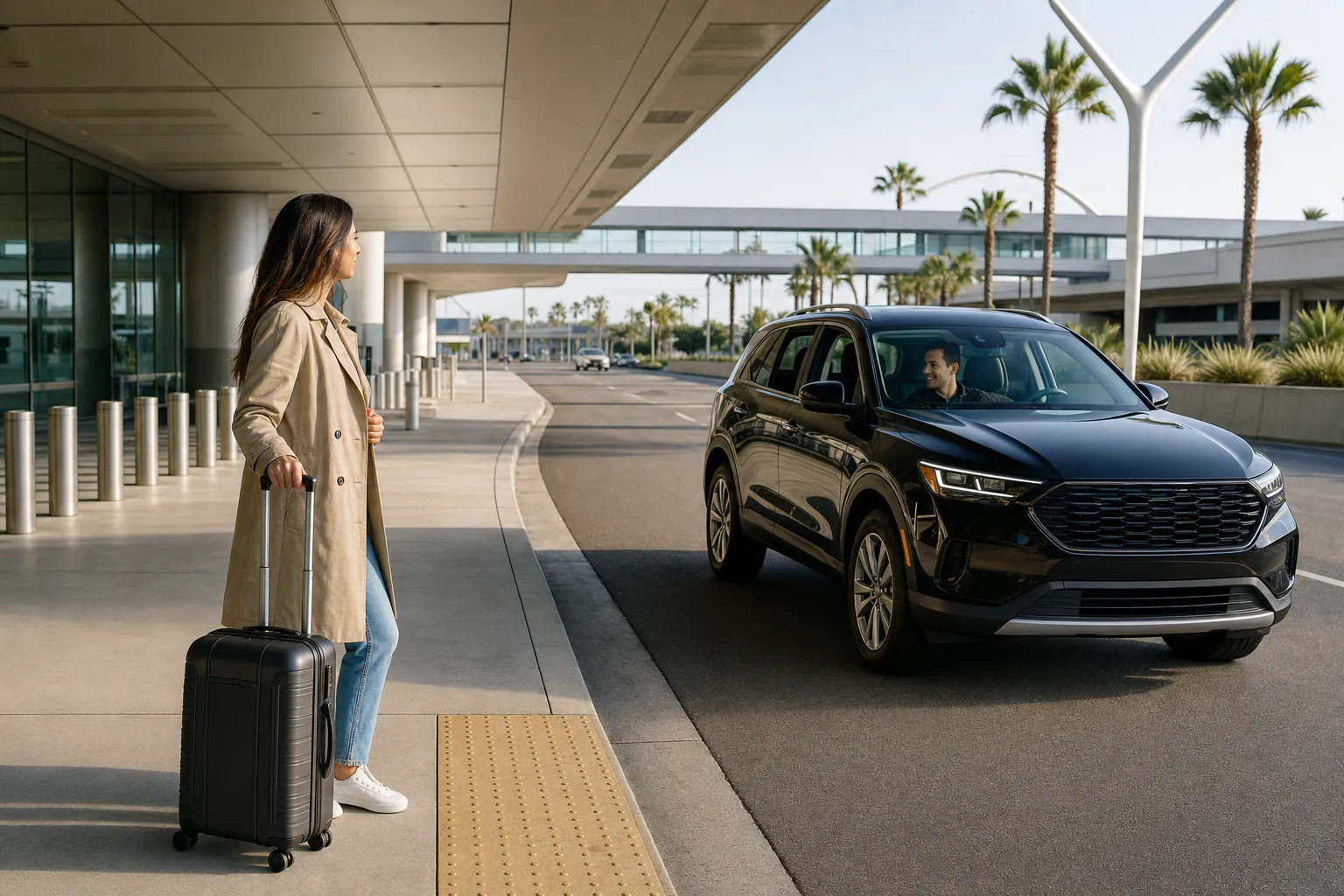
The waiting lot is only the place to pause. The pickup itself happens in the Central Terminal Area. LAX directs family and friends collecting arriving passengers to the outer curb on the Lower/Arrivals Level outside baggage claim. Travelers should make sure they are on the arrivals level and can name their terminal before asking the driver to head in.
That distinction is important because LAX uses different pickup arrangements for different transportation choices. Standard ride apps and taxis use LAX-it near Terminal 1, while a private family pickup is at the arrivals curb. Travelers who choose a ride app can use the site's LAX-it pickup guide; a person being collected by a friend should not walk there by mistake.
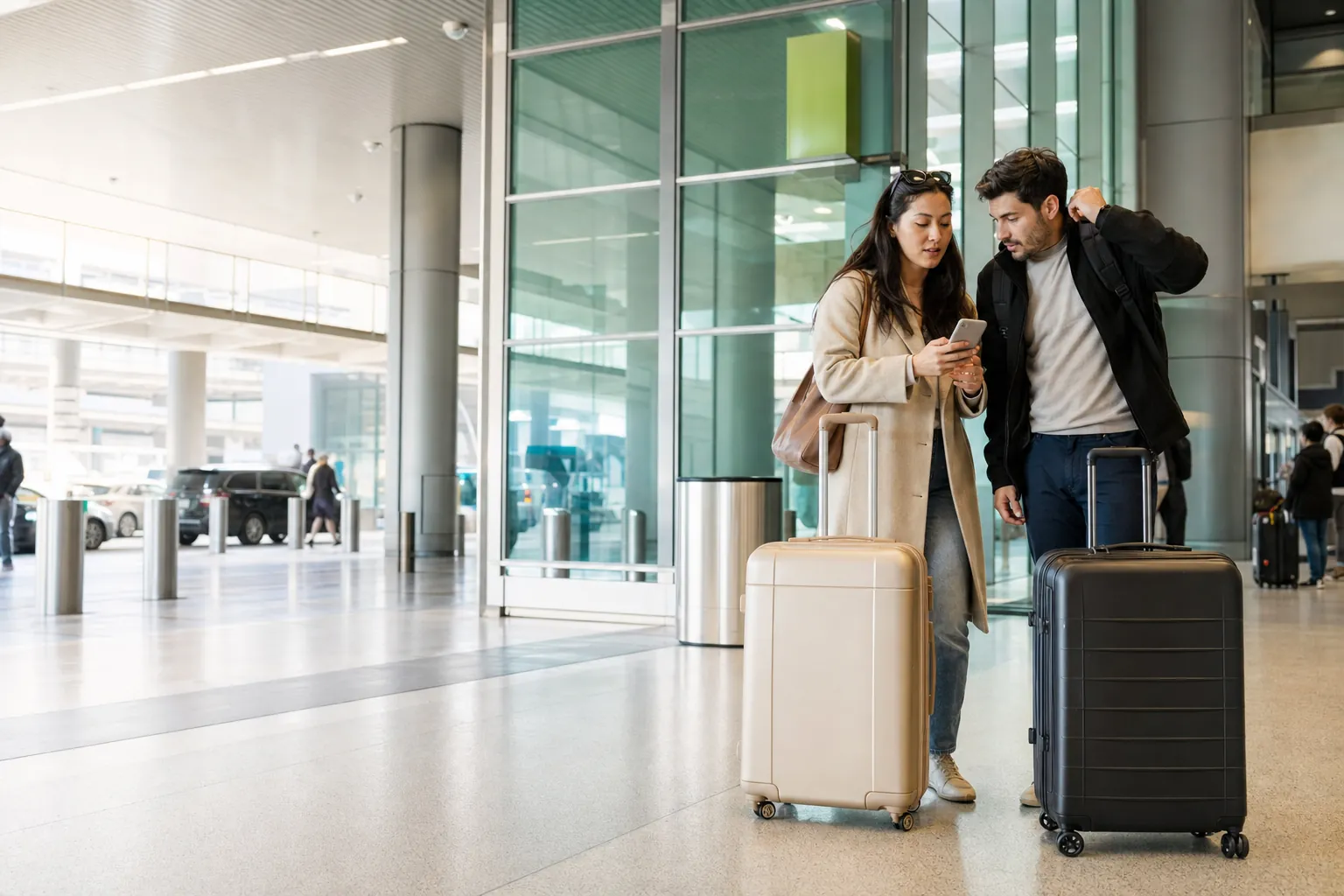
If the driver is not familiar with LAX, use a low-pressure message format: “Terminal 5, lower arrivals, outside baggage claim, all bags collected.” That gives the driver enough information to approach the correct part of the terminal without trying to decode a vague “I'm outside” text while moving through airport traffic.
Build in the steps travelers forget to count
Flight trackers are helpful, but they only cover one piece of the arrival. Before an arriving passenger can make a useful pickup call, the aircraft has to reach the gate, the traveler has to leave the plane, walk through the terminal, collect checked luggage and, on an international arrival, complete the required entry process. The pace can be very different between terminals and between travelers.
For a domestic arrival with a carry-on, the gap between landing and curbside may be short. For a family with checked bags, it can be considerably longer. A traveler arriving from abroad may have customs and baggage steps that no one should try to predict from the plane's position alone. Waiting in the lot gives both people permission to use the real situation instead of racing a clock that was never very precise.
It also reduces unnecessary messages. Rather than asking “Are you out yet?” every few minutes, agree before the flight on one simple standard: the traveler sends a message only after every person and bag is ready to move. The driver keeps the phone charged, stays in the legal waiting area and leaves when that final message arrives.
Choose the pickup plan that fits the arrival
| Pickup situation | Usually the simplest plan | Why it works |
|---|---|---|
| Friend or family pickup, flexible timing | Cell phone waiting lot, then the arrivals curb | The driver can wait nearby without entering the terminal loop before the traveler is ready. |
| Driver needs to meet the traveler inside | Short-term terminal parking | It creates time and access to help with bags or to meet an unfamiliar traveler before the curb handoff. |
| Group, child seats, many bags or fixed schedule | Scheduled private airport transfer | The pickup approach and vehicle fit can be settled before travel day rather than negotiated at the curb. |
| On-demand ride after landing | Follow the app's LAX-it instructions | Standard ride-app pickups have a separate airport flow and should not use a family-pickup plan. |
There is no prize for choosing the cheapest-looking option when it does not match the arrival. A free waiting lot is excellent for a simple private pickup. It is not designed to solve every airport handoff. Choosing the right plan early means the traveler spends less time standing beside traffic and the driver spends less time improvising in a busy terminal area.
When the waiting lot is the right choice
The waiting lot is a good fit for a simple private pickup. It works well when a friend or family member is flying in, the driver can remain in the car, and the passenger can manage the curb handoff after reaching baggage claim. It is especially useful when the arrival time is uncertain and there is no reason to pay for terminal parking simply to wait.
It is less ideal when the traveler needs help before reaching the curb. That can include an older guest, a child traveling alone, someone with substantial mobility equipment, a first-time international visitor or a group with many bags. In those situations, parking closer to the terminal or arranging a staffed meet-and-greet can be a better plan, because the value is assistance rather than simply a place to wait.
Families also need to think beyond headcount. A small party may still have several large cases, a stroller or a car-seat request. If one vehicle needs to carry the whole group comfortably, a planned airport ride can take the sizing and pickup details out of the last-minute scramble.

When a planned airport transfer can be easier
A waiting-lot pickup is built around a private driver doing the final airport handoff. A scheduled private transfer is useful when that handoff needs more planning before travel day. The difference is not simply the vehicle. It is the chance to settle the flight details, passenger count, luggage, child-seat needs and destination before anyone is standing outside a terminal.
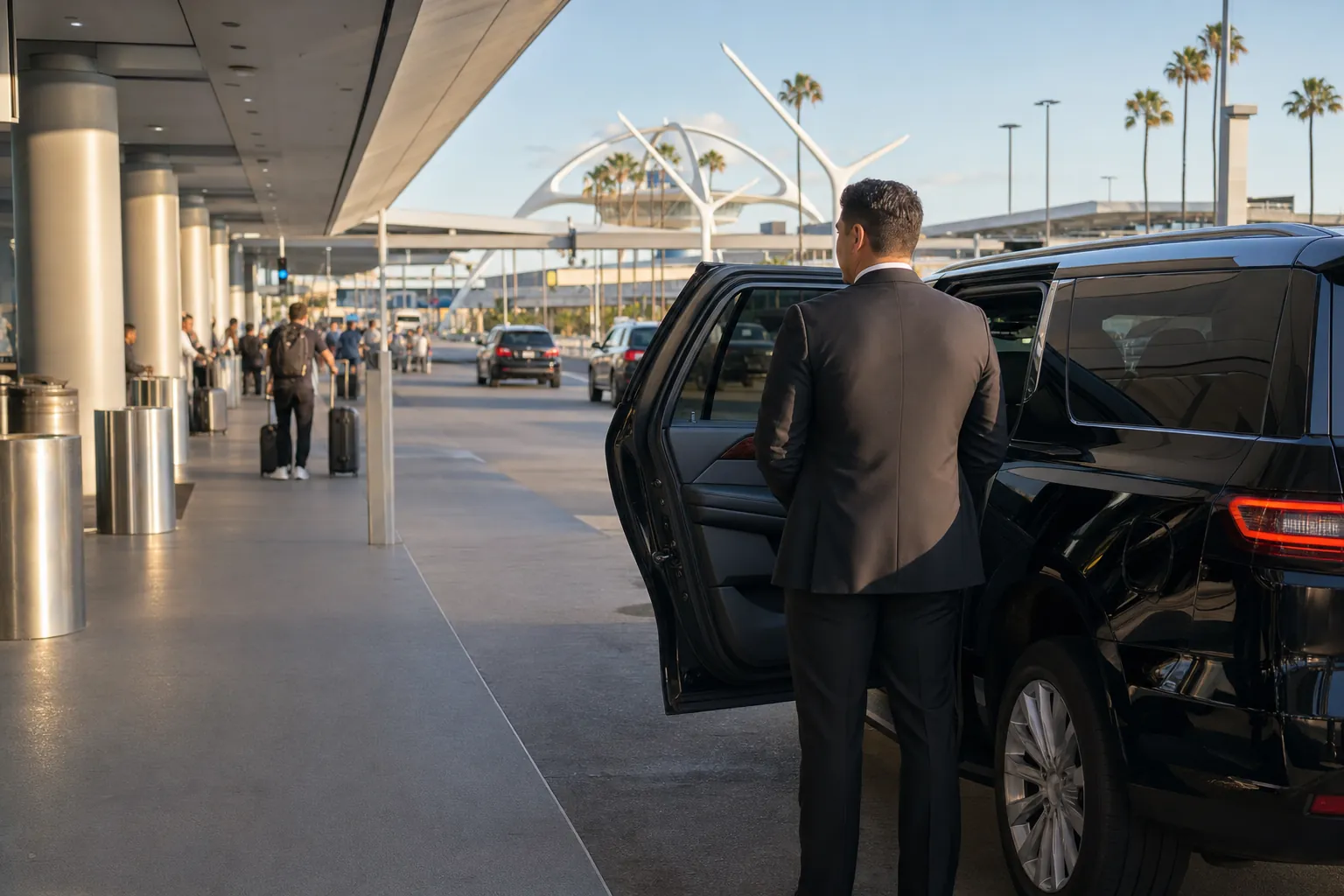
LAX Black Car Services can plan an airport transfer around the group, from a smaller sedan to an SUV, van or Sprinter-style option. That can be helpful for families, business travelers, cruise passengers, older guests and groups that need everyone and every bag to move together. Travelers who want help meeting someone at the airport can also review what an LAX meet-and-greet service involves.
The right choice depends on the trip. The cell phone lot is a sensible free tool for a straightforward pickup. A scheduled vehicle is often easier when the arrival has a deadline, a particular vehicle requirement or more coordination than a curbside text can solve.
A quick LAX pickup checklist
- Check the flight status, but do not leave the waiting lot based on touchdown alone.
- Confirm which passenger will send the ready message.
- Ask for the terminal and Lower/Arrivals Level curb details.
- Keep the vehicle attended and respect the two-hour waiting limit.
- Use the official LAX traffic page and airport signs if roads or access points look different from a previous visit.
- Choose terminal parking or a scheduled transfer if the traveler needs more help than a quick curbside handoff allows.
Frequently asked questions
Where is the LAX Cell Phone Waiting Lot?
LAX currently lists two free waiting lots: the 96th Street Lot at 6217 96th Street and the Century Lot at 5800 W. Century Boulevard. Airport construction and approach roads can change, so use the official LAX parking page and airport signs as the final check before you leave.
Is the LAX Cell Phone Waiting Lot free?
Yes. LAX says motorists meeting arriving passengers may wait free for up to two hours. The lots are for a driver waiting in the vehicle, not for overnight parking or for leaving a vehicle unattended.
Can I take a shuttle from the cell phone lot to the terminal?
No. LAX states that shuttle service is not available to or from the cell phone waiting lots. They are a place for the driver to wait until the arriving traveler is ready, then drive to the Lower/Arrivals Level for curbside pickup.
When should I leave the waiting lot for pickup?
Wait until the traveler has cleared baggage claim, collected every bag and is at the outer curb on the Lower/Arrivals Level. A quick text with the terminal and curb area is more useful than a message sent as soon as the plane lands.
Can a rideshare or commercial vehicle use the LAX Cell Phone Waiting Lot?
No. LAX says commercial vehicles and ride-service vehicles are not allowed in the waiting lots. They are intended for private motorists meeting an arriving passenger.